Cycling is forbidden.
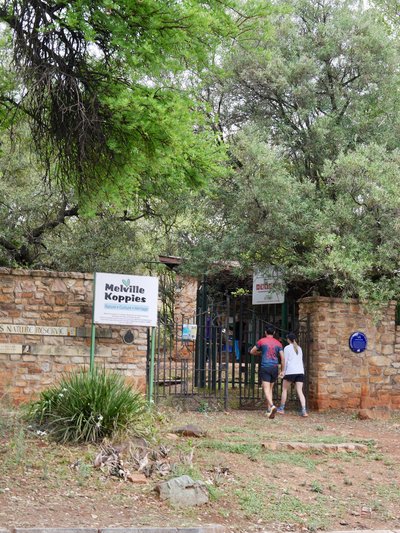
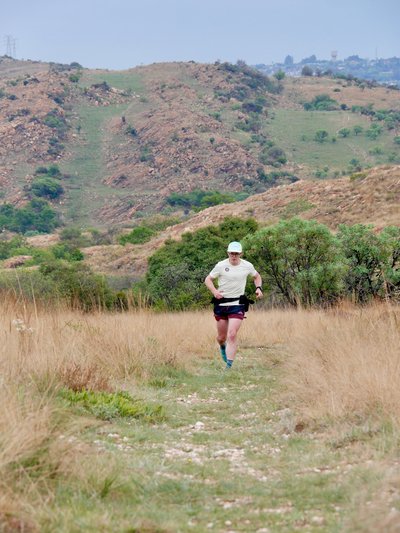
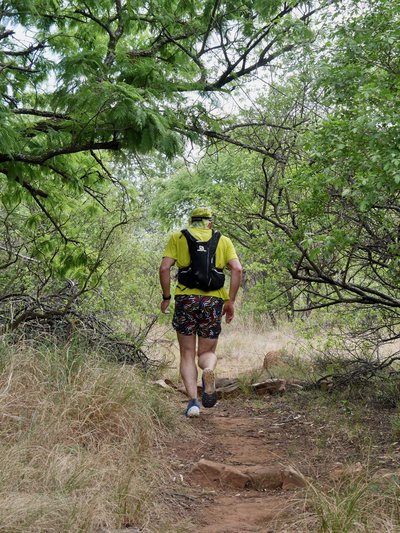
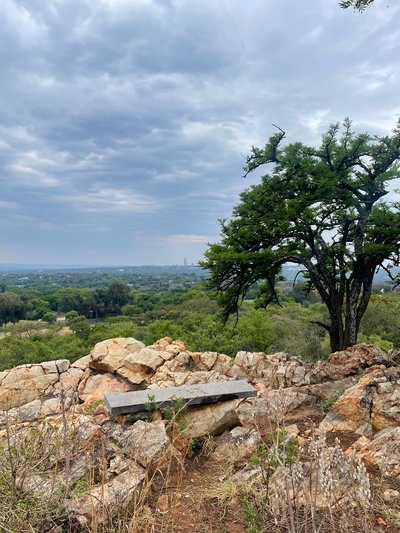
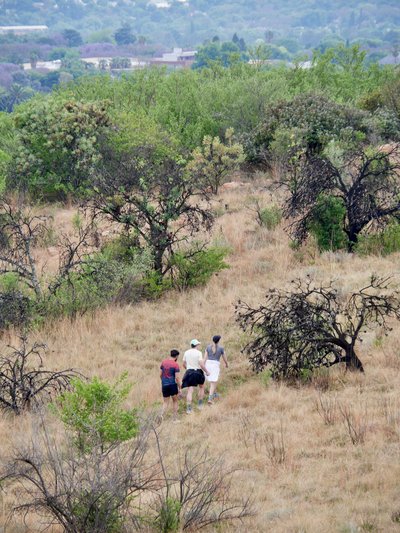
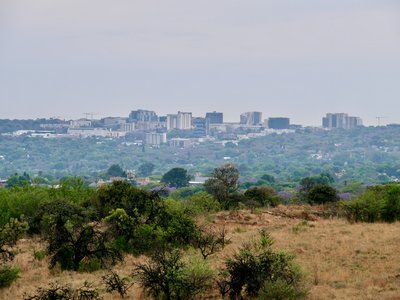
Melville Koppies is a nature reserve and a Johannesburg city heritage site. It is the last conserved remnant of Johannesburg's ridges as they were before the discovery of gold in 1886. Its geology goes back three billion years. Stone tools show that Early Stone Age man camped here as long as 500 000 years ago. There is a Late Stone Age living floor. Within the last 1 000 years Iron Age immigrants arrived, and remains of their kraal walls can be found on the northern slopes. In 1963 an iron-smelting furnace was excavated and can be seen today. The vegetation of the Koppies is entirely indigenous and is a remarkable example of the richness of highveld grasses, flowers, and trees so close to a city centre. 185 species of birds has been recorded at the reserve.
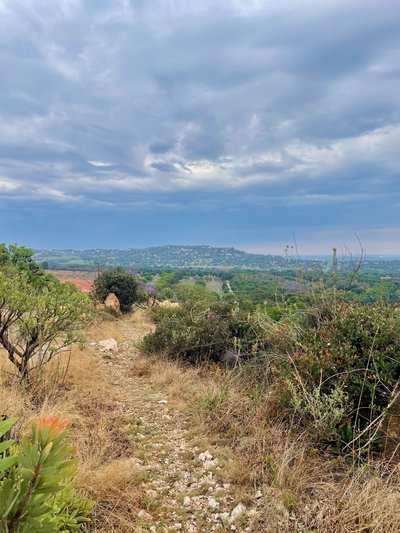
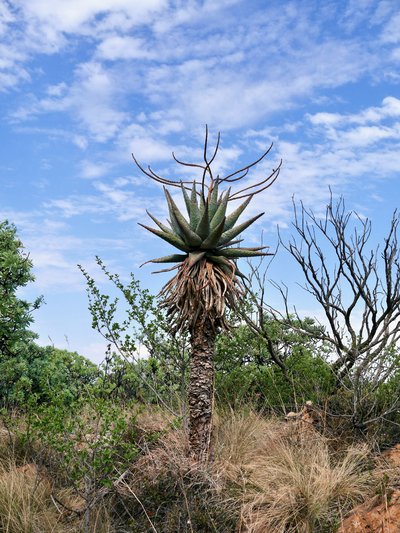
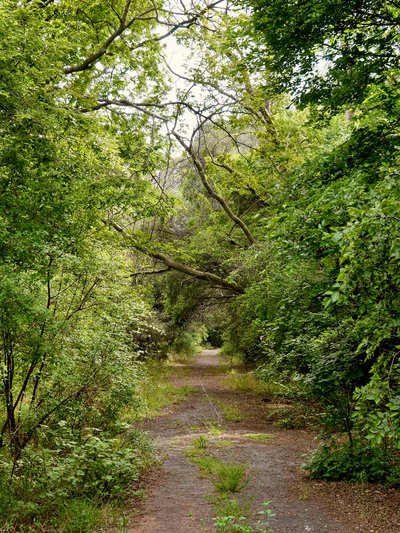
Melville Koppies Nature Reserve is one of Johannesburg's most remarkable natural and cultural treasures. Situated just a few kilometres from the city centre, this 150-hectare reserve protects a rare remnant of the Highveld landscape that once covered much of the Witwatersrand. Within its rocky ridges, grasslands and wooded valleys lies a unique combination of geological, ecological, archaeological and historical heritage spanning billions of years. The reserve's most striking feature is its geology. Melville Koppies sits on the edge of the ancient Kaapvaal Craton, one of the oldest pieces of continental crust on Earth. The rocky ridges expose some of the oldest geological formations associated with the Witwatersrand Supergroup, whose sediments were deposited more than three billion years ago along the shores of an ancient inland sea. The quartzite ridges and rocky outcrops that define the landscape today provide a dramatic window into the deep geological history of southern Africa and help explain the formation of the Witwatersrand, one of the world's most famous gold-bearing regions. Ecologically, Melville Koppies is a refuge for indigenous Highveld grassland and woodland vegetation in the heart of a densely urbanised city. More than 300 species of indigenous plants have been recorded, including a rich diversity of grasses, wildflowers, shrubs and trees. Seasonal displays of flowering plants transform the reserve throughout the year, while the mosaic of grassland, rocky slopes and sheltered kloof creates a variety of habitats that support an impressive range of wildlife. The reserve protects remnants of an ecosystem that has largely disappeared from Johannesburg due to urban development, making it an important conservation area for both plants and animals. Despite being surrounded by suburbs, Melville Koppies supports a surprising diversity of fauna. Mammals recorded in the reserve include African civet, genet, slender and yellow mongoose, African hedgehog, scrub hare, elephant shrew and several rodent species. More than 180 bird species have been observed in and around the reserve, making it a popular destination for birdwatchers. Reptiles, amphibians and countless invertebrates also contribute to the ecological richness of this urban sanctuary. What truly sets Melville Koppies apart, however, is its extraordinary cultural and archaeological significance. Evidence of human occupation stretches back hundreds of thousands of years, with Stone Age artefacts revealing the presence of hunter-gatherer communities long before Johannesburg existed. The reserve preserves traces of San occupation, including artefacts associated with hunting and tool-making, while archaeological excavations have uncovered evidence of Iron Age settlement and iron smelting dating back nearly a thousand years. The area occupied an important position along regional trade routes, linking communities across the interior of southern Africa. More recent history is also deeply embedded in the landscape. During the late nineteenth century and the development of Johannesburg following the discovery of gold, the ridges of Melville Koppies became a strategic landmark overlooking the growing city. The reserve therefore preserves a continuous record of human interaction with the landscape, from ancient hunter-gatherers and Iron Age farmers to the emergence of modern Johannesburg. The conservation value of Melville Koppies extends far beyond its ecological importance. In 1959, following a public campaign to prevent development of the site, the area was proclaimed a nature reserve. For more than six decades, dedicated volunteers, conservationists and local organisations have worked to protect and manage the reserve. Their efforts have safeguarded not only rare biodiversity, but also an irreplaceable archive of geological and cultural heritage. Today, Melville Koppies serves as a living outdoor classroom, providing opportunities for environmental education, historical interpretation, scientific research and recreation. Few places in South Africa offer such a rich combination of natural and cultural heritage within an urban setting. Melville Koppies is a place where visitors can walk through ancient grasslands, stand on rocks billions of years old, encounter wildlife in the heart of the city, and explore a landscape shaped by countless generations of people. As both a Johannesburg Heritage Site and a nature reserve, it remains a powerful reminder of the importance of conserving the natural and historical landscapes that connect us to our past while enriching the lives of present and future generations.
| Location | South Africa - Gauteng - City of Johannesburg |
| Website | https://www.mk.org.za/ |
| Area | 37.96ha |
| Year of foundation | 1959 |
| DtP ID | d508dea1-8d5e-4bee-aa3c-ee3cc2308331 |
| Name and division |
Forge
Cartography |
| Website | https://www.forgesa.com/ |
| Address |
Show address Hide address
29 Sea Glades
Hout Bay 7806 Hout Bay South Africa |
Cycling is forbidden.

Motor vehicles are forbidden.
Camping is forbidden.

Disposing of waste is forbidden.

Fire is forbidden.
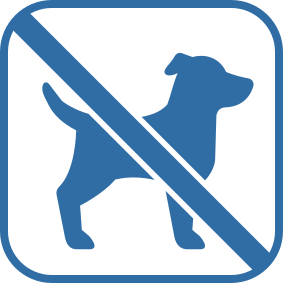
Dogs are forbidden.
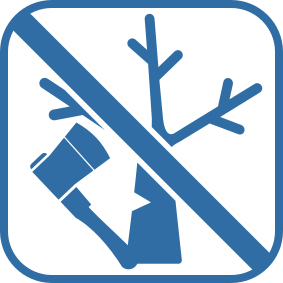
Cutting or injuring trees is forbidden.
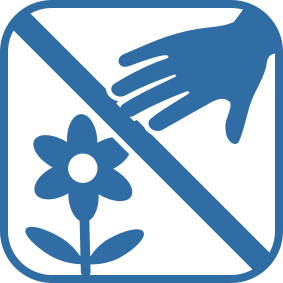
Collecting plants is forbidden.
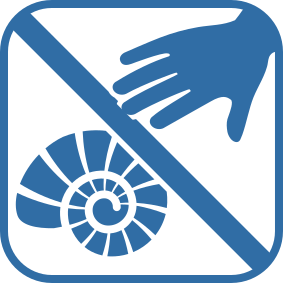
Collecting minerals and fossils is forbidden.

Noise (tape recorders, players) is forbidden.
The Province of Transvaal - Feb. 11, 1959