Entering off the beaten path is forbidden.
Die verbliebenen Vordeichsflächen sind die Reste der ursprünglich weiten Elbauen-Landschaften.
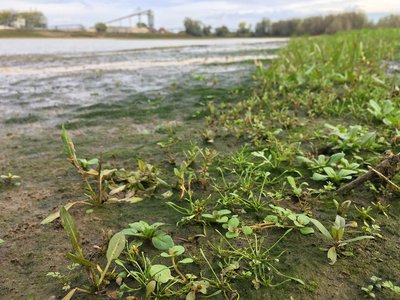
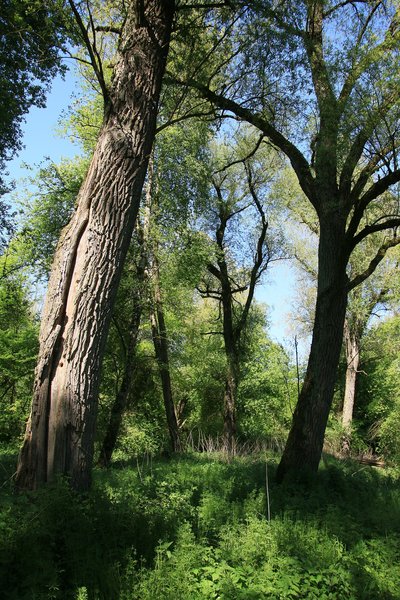
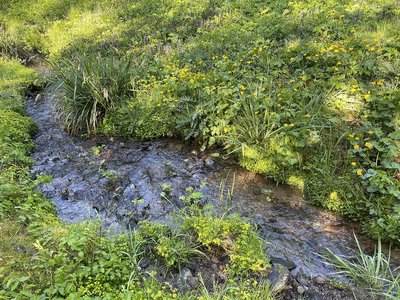
The nature reserve is located in the immediate reach of tidal and floodplain dynamics. In this area, there are regular changes in the direction of the water flow and associated high and low water levels. Nowadays, these also rise and fall considerably faster, but at the same time they are higher and occur much more frequently than was the case 50 years ago, for example. As a result, the Zollenspieker area now experiences an annual average of 40 to 60 floods, during which the entire foreland is under water. Regular flooding, erosion and sedimentation processes have created an extreme habitat. A total of around 150 tide-dependent plant species can be found here. A remarkable feature is the coexistence of Atlantic species transported upstream by the tide and continental river valley plants unaffected by the tide. These include rare species such as Elbe cocklebur and annual mugwort. Schierlings-Wasserfenchel (Onenanthe conioides), a species found only in the salt-free tidal area of Hamburg, is expected to find new habitats here. The Wiebel's sedge, which only occurs on the Elbe, grows here in large numbers. This is also a globally unique plant species whose current habitat must be classified as irreplaceable. The extensively used grasslands and pastures of the Elbe floodplain provide habitat for a wide variety of bird species, including lapwings, common snipes and meadow pipits. Rare meadow birds such as black-tailed godwits and redshanks return here every year from their wintering grounds. Kingfishers, common golden orioles and Eurasian wrynecks are also found in this area. Of course, white storks also breed here, hunting small animals on the Elbe meadows flooded during high water. At low tide, the dyke foreland serves as a feeding, gathering and resting place for numerous bird species. These include goosanders, shelducks and common teals. The tidal creeks, channels and former harbour basins of the vegetable barges, which are subject to the influence of the Stromelbe, also serve as a nursery for rare Elbe fish.
| Location | Germany - Hamburg - Hamburg |
| Website | https://www.hamburg.de/politik-und-verwaltung/behoerden/bukea/themen/naturschutz/naturschutzgebiete/start-zollenspieker-173106 |
| Area | 79.10ha |
| Year of foundation | 1988 |
| IUCN Category | IV |
| DtP ID | 56709f0d-1327-4b31-af11-f82792e6da94 |
| Name and division |
Freie und Hansestadt Hamburg; Behörde für Umwelt, Klima, Energie und Agrarwirtschaft;
Naturschutz; Management der Hamburger Naturschutzgebiete, Biotopverbund |
| Website | https://www.hamburg.de/naturschutz/ |
| Address |
Show address Hide address
Neuenfelder Straße 19
21109 Hamburg Germany |
Habitat
Habitat
Habitat
Flora
Flora
Fauna
Fauna
Flora
Flora
Fauna
Flora
Flora
Entering off the beaten path is forbidden.
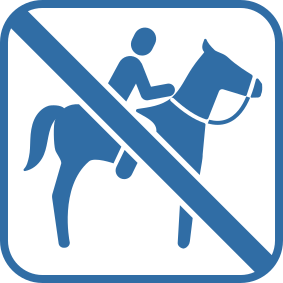
Horse riding is forbidden.

Motor vehicles are forbidden.
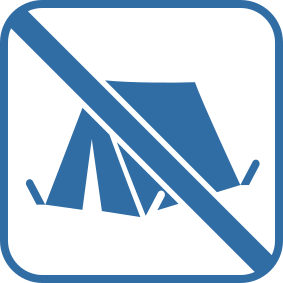
Camping is forbidden.
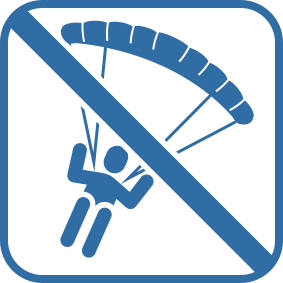
Air sport (starting and landing) is forbidden.
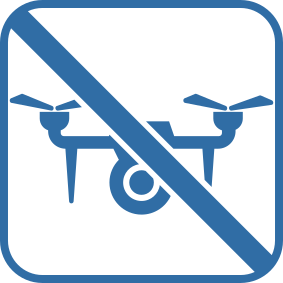
Drones and model aircraft are forbidden.

Disposing of waste is forbidden.
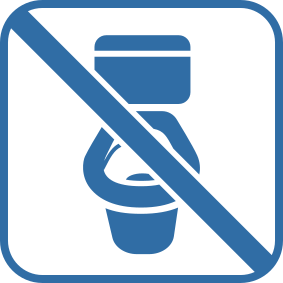
Going to the toilet is forbidden.

Dogs are forbidden.

Fire is forbidden.
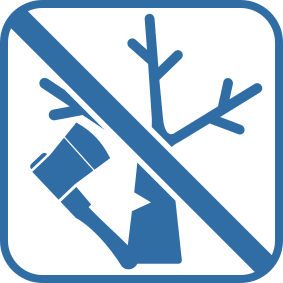
Cutting or injuring trees is forbidden.

Collecting plants is forbidden.

Mushroom collecting is forbidden.

Collecting minerals and fossils is forbidden.
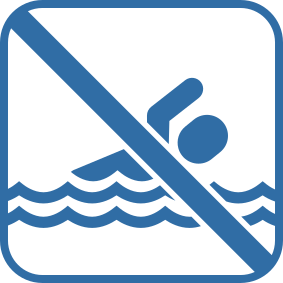
Swimming is forbidden.
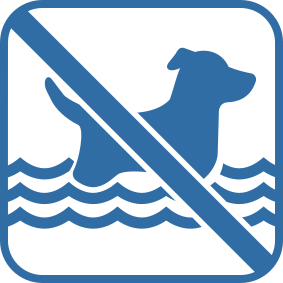
Bathing animals is forbidden.
April 26, 1988