
Entering is only allowed on paths and tracks.
The 34th nature reserve, which covers 250 hectares, is situated in the Elbmarsch nature area in Harburg, on the border with Lower Saxony. The positive development in the area is due to the implementation of nature conservation compensation measures in recent years. Restoration and extensification measures across an area of 140 hectares have significantly improved the area.
The Neuländer peatland meadows are of particular importance as a habitat for the highly endangered species of meadow bird.
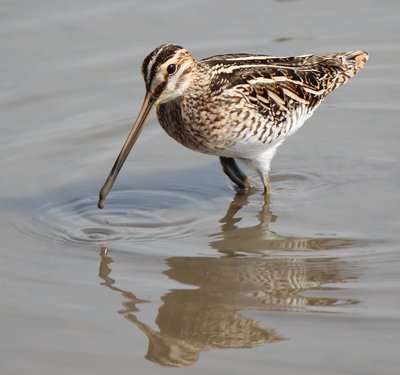
In recent years, redshanks, lapwings and common snipes have managed to re-establish stable populations here. Eurasian skylarks and meadow pipits are also present in large numbers.
Some of these compensatory measures have created new core habitats to protect amphibians, birds and insects. Since 2016, the rare black-tailed godwit has also attempted to breed here. Since 2016, a pair of cranes has used the shallow water zones created as a breeding ground and has successfully been raising their young here. Eleven bird species listed as endangered on the Red List for Hamburg or Germany breed in the area.
Additionally, the Neuländer moorland meadows are home to 317 different plant species, 74 of which are listed as endangered in Germany or Hamburg. These include the marsh marigold, fen bedstraw and tubular water-dropwort. The area is also of great importance for endangered species such as the moor frog and the green hawker dragonfly.
| Location | Germany - Hamburg - Hamburg |
| Website | https://www.hamburg.de/politik-und-verwaltung/behoerden/bukea/themen/naturschutz/naturschutzgebiete/neulaender-moorwiesen-173290 |
| Area | 2.50km² |
| Year of foundation | 2017 |
| IUCN Category | IV |
| DtP ID | 856ba424-8e16-49fa-ba7a-1dc0f1b60279 |
| Name and division |
Freie und Hansestadt Hamburg; Behörde für Umwelt, Klima, Energie und Agrarwirtschaft;
Naturschutz; Management der Hamburger Naturschutzgebiete, Biotopverbund |
| Website | https://www.hamburg.de/naturschutz/ |
| Address |
Show address Hide address
Neuenfelder Straße 19
21109 Hamburg Germany |
Fauna
Die Bekassine wird dank ihrer merkwürdigen (an Meckern erinnernden) Geräusche beim Balzflug auch "Himmelsziege" genannt. Sie ist ein sehr früher Gast und kommt bereits ab März zurück aus ihren Überwinterungsgebieten im Mittelmeerraum und Afrika oder sie überwintert sogar bei uns. Auch die Bekassine baut ihre Nester direkt am Boden und ernährt sich v.a. von Würmern und Insekten.
Fauna
Fauna
Fauna
Fauna
Fauna
Flora
Fauna
Flora
Entering is only allowed on paths and tracks.


Horse riding is only allowed on designated paths.

Motor vehicles are forbidden.

Swimming is forbidden.
Camping is forbidden.

Air sport (starting and landing) is forbidden.
Drones and model aircraft are forbidden.

Disposing of waste is forbidden.

Going to the toilet is forbidden.

Fire is forbidden.

Dogs must be kept on a leash.

Collecting plants is forbidden.

Mushroom collecting is forbidden.

Fishing is forbidden.

Bathing animals is forbidden.
Aug. 1, 2017
Aug. 1, 2017