

Entering is only allowed on paths and tracks.
Die letzten Reste einer ehemals weit ausgedehnten Moorlandschaft gehören zu diesem Schutzgebiet.
The landscape is characterised by nutrient-poor areas with birch swamp forests. The presence of dead birch trees does not indicate poor health of the tree population, but rather points to the high water table typical of peatland. This charming scene is complemented by lush stands of bog asphodels in the damp peatland meadows.
Walkers will easily spot sphagnum mosses, cranberries, cross-leaved heather and cottongrass in spring, as these can be seen from a distance. Their inflorescences consist of spikelets made up of multiple flowers. The long floral bracts of the fruits form the characteristic white woolly tuft. Contrary to common belief, these 'cotton-like tufts' are not displayed by the plants when they are in flower, but when they are bearing fruit.
Marsh cinquefoil, marsh speedwell and marsh gentian can also be found in the Hummelsbüttel peatlands.
The Hummelsbütteler Moore Nature Reserve aims to preserve native ecosystems and provide a habitat for rare and endangered animal species. These include the moor frog, which turns blue during the spawning season, and the viviparous lizard. Moor frogs depend on permanently wet habitats and have suffered as a result of the large-scale drainage of wetlands that took place in the past. The quiet observer may also spot the black darter and ruddy darter.
| Location | Germany - Hamburg - Hamburg |
| Website | https://www.hamburg.de/politik-und-verwaltung/behoerden/bukea/themen/naturschutz/naturschutzgebiete/start-173434 |
| Area | 60.75ha |
| Year of foundation | 2008 |
| IUCN Category | IV |
| DtP ID | 129333e6-3445-4fa8-a83f-1b5015523d0d |
| Name and division |
Freie und Hansestadt Hamburg; Behörde für Umwelt, Klima, Energie und Agrarwirtschaft;
Naturschutz; Management der Hamburger Naturschutzgebiete, Biotopverbund |
| Website | https://www.hamburg.de/naturschutz/ |
| Address |
Show address Hide address
Neuenfelder Straße 19
21109 Hamburg Germany |
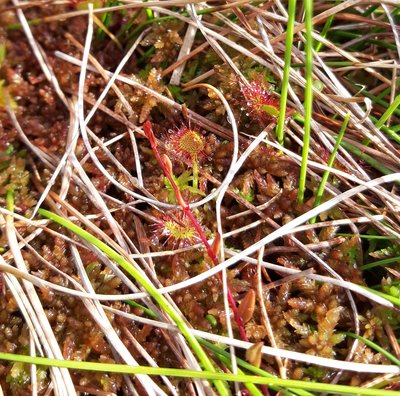
Flora
Der sehr seltene Sonnentau ist ein wahrer Überlebenskünstler, der eine einzigartige Strategie entwickelt hat, lebenswichtige Nährstoffe zu bekommen. Die Tautröpfchen an den Blättern locken durstige Insekten an. Doch der Tautropfen entpuppt sich als klebriger Schleim, der sein Opfer nicht mehr loslässt. Das Blatt krümmt sich zusammen und schließt das Insekt ein, wo es mit Hilfe von Verdauungsdrüsen zersetzt wird.
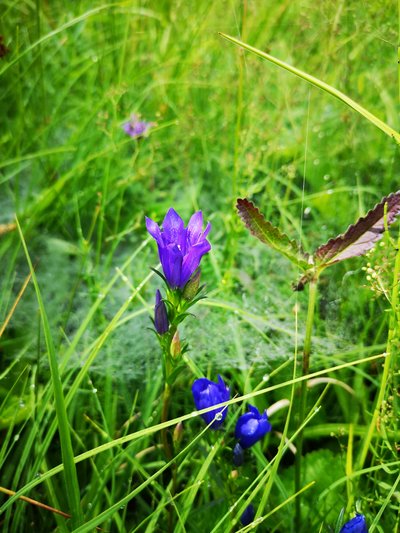
Flora
Der Lungen-Enzian (Gentiana pneumonanthe) ist eine seltene und in Deutschland stark gefährdete Pflanzenart, die vor allem in nährstoffarmen Mooren und Feuchtwiesen vorkommt. Charakteristisch sind seine tiefblauen, glockenförmigen Blüten, die meist im Spätsommer erscheinen. Die Art ist auf einen stabilen Wasserhaushalt und offene, wenig verbuschte Standorte angewiesen und reagiert empfindlich auf Entwässerung und Nutzungsänderungen. Daher gilt der Lungen-Enzian als wichtiger Indikator für intakte Moor- und Feuchtlebensräume.
Flora
Habitat
Flora
Fauna
Flora
Fauna
Fauna
Fauna
Flora
Fauna
Fauna
Flora
Entering is only allowed on paths and tracks.


Horse riding is only allowed on designated paths.

Swimming is forbidden.

Camping is forbidden.

Air sport (starting and landing) is forbidden.

Drones and model aircraft are forbidden.

Disposing of waste is forbidden.

Going to the toilet is forbidden.

Fire is forbidden.

Dogs must be kept on a leash.
On the public footpath known as ‘Rehagen’, the requirement to keep dogs on a short lead does not apply.

Cutting or injuring trees is forbidden.

Collecting plants is forbidden.

Mushroom collecting is forbidden.

Collecting minerals and fossils is forbidden.

Fishing is forbidden.

Bathing animals is forbidden.