

Entering is only allowed on paths and tracks.
Diese alte bäuerliche Kulturlandschaft soll ihren Ursprung schon in der Bronzezeit haben.
The area's flora is shaped by the geological formations of the stream valleys and the Hainesch and Iland plateaus. The latter serve as farmland and garden plots. In spring, the orchard blossom glows brightly, while the willows provide a lush green contrast to the meadow flowers and, in summer, the yellow cornfields. Hedges, hedgerows and patches of deciduous woodland are scattered throughout the landscape, and in some places there are imposing old solitary trees such as oaks and beeches, remnants of the area's former natural forest cover. The remnants of the former forest management practice known as coppicing are also striking. In this method, trees are regularly cut back to the stump, resulting in constant and ever-increasing growth of new shoots.
The vegetation on the slopes and in the Saselbek valley differs greatly from that of the coppice woodland. The steep slopes are covered in a sparse mixed deciduous forest where rare flowering plants such as spiked rampion and intermediate corydalis can be found. At the foot of the slopes in the Saselbek floodplain, a primeval forest of alder, ash and willow is slowly re-establishing itself. The valley floor is home to abundant stands of large bittercress. The broad-leaved marsh orchid grows in the marshy meadows leading to the mill pond, which is surrounded by dense reeds, particularly in the south-east.
The floodplain forests, marshes and waterways provide a habitat for a variety of wildlife, including many waterbirds and amphibians. Ducks and rails are particularly abundant, and little grebes and grey wagtails can also be spotted. Grass, moor and water frogs, as well as smooth newts, are not uncommon in and around the waterways. The hillside woodlands provide breeding and feeding grounds for many birds. As a sit-and-wait predator, the kingfisher lies in wait for small fish in well-protected hunting spots beneath the overhanging trees along the Saselbek, Furtbek and Haingraben, as well as in the neighbouring Rodenbeker Quellental. The rivers and streams are rich in fish, providing the kingfisher with an abundant food source. Thanks to these optimal living conditions, this area is home to the largest population of these beautiful birds in Hamburg. However, prolonged cold winters pose a threat to this population. This can result in the loss of more than half of the population.
| Location | Germany - Hamburg - Hamburg |
| Website | https://www.hamburg.de/politik-und-verwaltung/behoerden/bukea/themen/naturschutz/naturschutzgebiete/hainesch-173388 |
| Area | 70.91ha |
| Year of foundation | 1975 |
| IUCN Category | IV |
| DtP ID | 0e7aba5b-e19b-42ca-99b0-a01ba68aca6a |
| Name and division |
Freie und Hansestadt Hamburg; Behörde für Umwelt, Klima, Energie und Agrarwirtschaft;
Naturschutz; Management der Hamburger Naturschutzgebiete, Biotopverbund |
| Website | https://www.hamburg.de/naturschutz/ |
| Address |
Show address Hide address
Neuenfelder Straße 19
21109 Hamburg Germany |
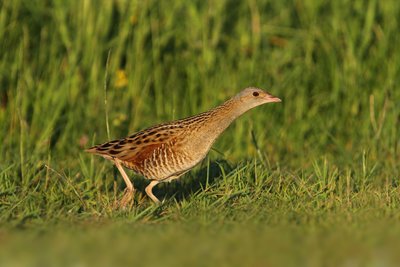
Fauna
Der Wachtelkönig ist ein Langstreckenzieher und verbringt die Winter südlich der Sahara. In unseren Wiesen ist er ab Mai zuhause, allerdings ist er sehr selten zu sehen, seine Rufe sind oft nachts zu hören. Wachtelkönige ernähren sich von Insekten und grünen Pflanzenteilen.
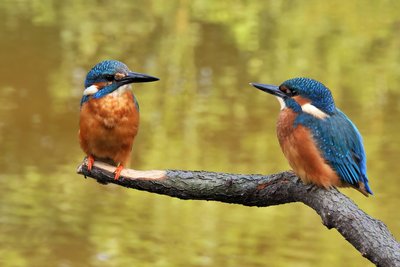
Fauna
Der Eisvogel (Alcedo atthis) ist die einzige in Mitteleuropa vorkommende Art aus der Familie der Eisvögel. Er besiedelt weite Teile Europas, Asiens sowie das westliche Nordafrika und lebt an mäßig schnell fließenden oder stehenden, klaren Gewässern mit Kleinfischbestand und Sitzwarten. Seine Nahrung setzt sich aus Fischen, Wasserinsekten (Imagines und Larven), Kleinkrebsen und Kaulquappen zusammen. Nähere Infos: https://www.lubw.baden-wuerttemberg.de/natur-und-landschaft/eisvogel
Flora
Flora
Fauna
Entering is only allowed on paths and tracks.

Swimming is forbidden.
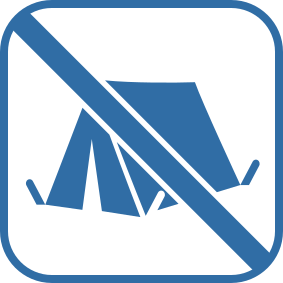
Camping is forbidden.

Air sport (starting and landing) is forbidden.

Drones and model aircraft are forbidden.

Disposing of waste is forbidden.

Going to the toilet is forbidden.

Dogs must be kept on a leash.
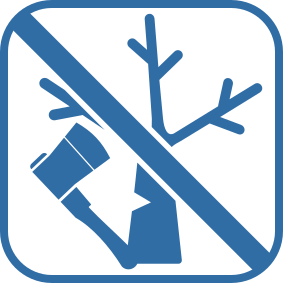
Cutting or injuring trees is forbidden.

Collecting plants is forbidden.

Mushroom collecting is forbidden.
Fishing is forbidden.

Bathing animals is forbidden.
Jan. 7, 1975
Jan. 7, 1975