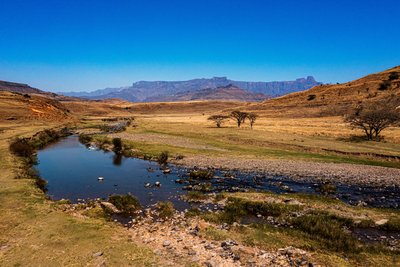

Disposing of waste is forbidden.
The Northern Drakensberg Nature Reserve is a 6,500-hectare protected area in the northern Drakensberg in the KwaZulu-Natal province in South Africa. It was established through a landmark collaboration between private landowners, conservation organisations and tourism operators. Linking the uKhahlamba-Drakensberg World Heritage Site with Sterkfontein Nature Reserve, it protects spectacular mountain landscapes, vital water catchments, endangered grasslands, rich biodiversity and ancient San rock art.
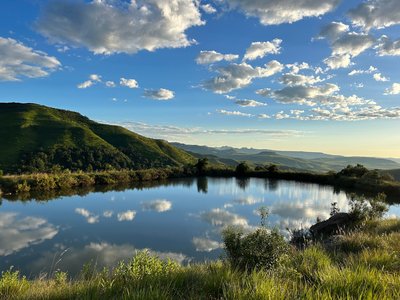
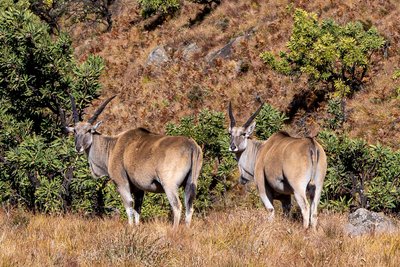
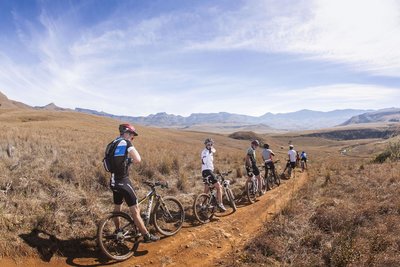
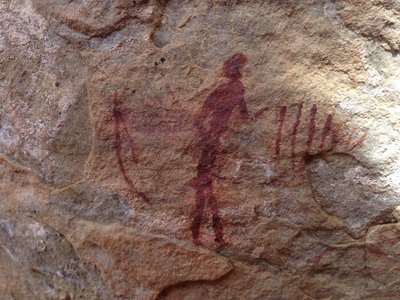
Established in April 2024, the Northern Drakensberg Nature Reserve (NDNR) is KwaZulu-Natal's newest nature reserve and one of the most significant conservation achievements in southern Africa in recent years. Spanning approximately 6,500 hectares, the reserve was created through the collaborative efforts of neighbouring landowners, conservation organisations, tourism businesses and the World Wide Fund for Nature (WWF), bringing together a mosaic of privately owned properties under a shared conservation vision. The reserve occupies a spectacular section of the northern Drakensberg, characterised by dramatic mountain slopes, sandstone cliffs, rolling foothills, crystal-clear streams and expansive montane grasslands. These landscapes form part of one of southern Africa's most important mountain ecosystems and contribute to a growing conservation corridor that links the Sterkfontein Nature Reserve in the Free State with the uKhahlamba-Drakensberg Park World Heritage Site in KwaZulu-Natal. The NDNR plays a critical role in conserving South Africa's threatened grassland biome. Less than three percent of the country's grasslands are formally protected, despite their immense importance for biodiversity and water security. The reserve safeguards extensive high-altitude grasslands that support a rich variety of plants, insects, birds and mammals while also acting as natural sponges that capture, store and release water into the river systems below. Water conservation is a central pillar of the reserve's purpose. The Drakensberg is widely regarded as southern Africa's most important water-producing region, supplying water to millions of people. Much of the water originating within the reserve ultimately flows into the Tugela River catchment, making the protection of these mountain wetlands, streams and grasslands essential for regional water security and ecosystem health. The reserve supports an impressive diversity of wildlife. Large herbivores include eland, mountain reedbuck and other antelope species, while predators such as leopard and spotted hyena still roam these mountains. Birdlife is particularly significant, with the area providing habitat for numerous grassland and montane species, including the critically endangered bearded vulture, one of Africa's rarest birds. The story of the reserve's eland population has become a symbol of conservation success. Following local extinction in the mid-twentieth century, eland were reintroduced to the broader region through conservation efforts centred on nearby Sterkfontein Nature Reserve. Today, herds of more than 150 animals roam freely across the Northern Drakensberg landscape. The reserve's logo, derived from an ancient San rock painting of an eland found in Cannibal Cavern, reflects both the ecological and cultural significance of this iconic species. Beyond its natural heritage, the reserve protects a rich archaeological and cultural landscape. The Drakensberg contains one of the world's greatest concentrations of San rock art, with some paintings dating back thousands of years. Numerous rock shelters and archaeological sites throughout the region preserve evidence of ancient hunter-gatherer communities whose spiritual beliefs, stories and artistic traditions remain embedded within the landscape. The Northern Drakensberg Nature Reserve was established not only to conserve biodiversity but also to support local communities and sustainable tourism. The reserve's founding members, including several lodges, guest farms and tourism enterprises, contribute to employment opportunities and economic development in the surrounding area while helping visitors connect with one of South Africa's most remarkable mountain environments. Today, the reserve stands as a powerful example of collaborative conservation. By protecting biodiversity, safeguarding critical water resources, preserving cultural heritage and supporting sustainable livelihoods, the Northern Drakensberg Nature Reserve helps ensure that this extraordinary corner of the Drakensberg remains protected for future generations.
| Location | South Africa - KwaZulu-Natal - Uthukela |
| Website | https://www.ndnr.co.za/nature-way/ |
| Area | 64.93km² |
| Year of foundation | 2024 |
| DtP ID | 4dfe9a4b-e769-461c-838a-689b01935d10 |
| Name and division |
Forge
Cartography |
| Website | https://www.forgesa.com/ |
| Address |
Show address Hide address
29 Sea Glades
Hout Bay 7806 Hout Bay South Africa |
Disposing of waste is forbidden.

Fire is forbidden.

Dogs are forbidden.

Collecting plants is forbidden.
KwaZulu-Natal Department of Economic Development, Tourism and Environmental Affairs - April 18, 2024